Make It Happen

Is it just me, my imaginary friend, or do others weary of the rhetoric surrounding International Women’s Day? “Make it happen” is one slogan I encountered, along with “Empowering Women – Empowering humanity”. I am quite sure that millions of words have been written in support of the idea that women’s equality is oh so close…More women in business. In government. In the highest positions of power. Opportunity for education and training. Equal pay. Freedom from fear of violence. More attention to women in sport. Yes, yes, we need merely fix these things (ahem, there are a few more items) – and half the world’s population will be equal to the other half.

If I sound a little cynical, friend, I remember International Women’s Year; yes, an entire year devoted to raising awareness of such gross inequalities as the lower rate of pay for women, stunning domestic abuse and sexual violence statistics, the lack of equal opportunity in an array of professions. That year was 1975, and these basic inequalities are still with us …even in the most progressive countries. And in many ‘developing’ nations, the lives of women are nasty and brutish. Four decades on, and oh so little progress is an anguish for half the world.

Of all the images of the day, this one stands out for me – this picture of Kubra Khademi armouring herself against unwanted touching, in a truly magnificent piece of performance art. Magnificent or not, I’ve read that Kubra Khademi has now gone into hiding, for fear of her life.
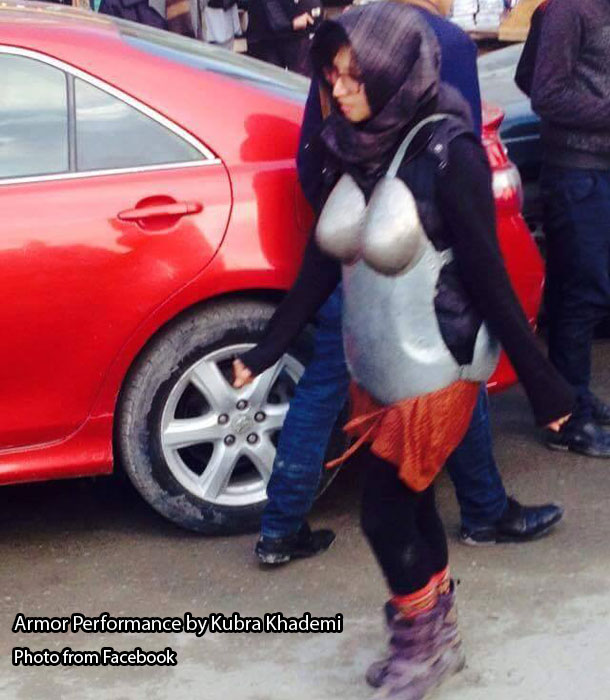
The-Armor-Performance-by-Kubra-Khademi

The banality of slogans in the face of such reaction is outrageous, frankly.

Kubra’s performance of wearing body armour is uniquely personal to her and her story. But it is also much larger than that, for it is the metaphor that half the world’s population understands in the most intimate way, for women carry out the act of armouring every day. It may be as physical as wearing a burqa, or as routine as applying make up to conform to some cultural notion of beauty. Perhaps slipping a gun or a can of mace into a purse for ‘protection’. Maybe it is the girl desperately trying not to provoke the rage of a father and his bruising blows. The women walking quickly and purposefully down dark streets – because you must have a good reason for being out after dark, or appear to have one. It is, of course, of all these things, and far too many more to recite, but mostly, it is the daily armouring against simply being ‘woman’ and not ‘man’.

There are obvious differences between men and women, and then there is the accumulated cultural conditioning, the stereotypes that resist being laid to rest, the persistent notion of otherness. (Men are from Mars, women are from Venus. Apologies to John Gray.) “Other’ is a forceful cultural construct, and it seems women are other. Well anyway, dear men, we’d like nothing better than to take off that armour, to immerse ourselves in that delicious sense of freedom that comes from knowing yourself, being yourself, and having that self valued for its uniqueness. And I say, dear men – I really do love you – because let us be clear, you are the gender that holds almost all of the positions of power, whether in government, or business, or many other spheres. Kindly stop blathering slogans at us and make it happen, would you?

I think Gloria Steinem’s words say it best:

The story of women’s struggle for equality belongs to no single feminist nor to any one organization but to the collective efforts of all who care about human rights.”

Mark that very important phrase, “human rights”, for it is the crux of the matter. We are all human, first and last, and we must find the humanity that insists that half the world’s population must not be compelled to armour themselves. Happy International Women’s Day.


February

February 1st has been celebrated as a seasonal holiday by a variety of cultures, most familiarly in the northern hemisphere as the harbinger of spring. The trees begin to bud, while deep underground the first stirrings of plant growth come to life, even under cover of snow. That most loved and useful flower, the violet, is the flower of February, its delicate beauty a charming evocation of both tenderness and hardiness. It is a month of quickening, of becoming alive to possibilities. The energies of winter slowly disperse and we prepare ourselves for the burgeoning time ahead.

I prepare myself for change, not knowing what the future holds, yet anchored in the seasonal changes all around me in a sure and certain way. It occurs to me that older cultures rooted in the time and tide of nature and her seasons must have experienced much less anxiety than we, simply because of this intimate knowing of what the seasons hold, if not the intimate details of one’s own unfolding. Quickening is surely a most apt word for the life not yet born, yet preparing itself to be born.

violets

The violet, again, symbol of constancy and faithfulness and willingness to take a chance at happiness – ah, frail flower, you are worthy of a meditation. Unfolding, becoming alive to the possibilities, feeling the yet faint pulse of seeds planted long ago, trusting that the seasons will bring forth their treasures and beauties in the fullness of time…I find that February is a lovely place to be. I hope it is so for you also, my imaginary friend.

Love Letter to a Cowboy

Why do I love you? You, the very particular you, cowboy?  Ah, you are funny. You are kind. You ask questions about what you don’t understand, which shows a depth of intelligence many do not possess. You have a quiet confidence – oh, I am not sure if that is the right word – a sureness, maybe, of yourself and what you can do that is so very marvelous. You pick up on emotional nuances – I would say you are sensitive, though I wonder if you will like that word. Your voice is beautiful, and makes me shiver. Your honeyed sweetness washes over me and I desire you, always.

Love between men and women in this western culture is suffused with ideas of romance that prove hard to dispel. “I love you” means “I want to marry you.” Or, “I want you to provide for me.” Maybe, “You will take care of all my emotional needs.” Sometimes it merely means “I do not want to be alone.” Romantic love is supposed to be gifts and surprises, roses on Valentine’s Day; diamonds, sexy lingerie, and flowers for no reason…oh, I could go on and on. If happily ever after is the goal, no wonder so many romantic relationships fail: the weight of cultural shoulds and expectations smothering the wild joy that arises in being held by love. That love becomes mere role playing to a set of gender-specific, culturally-mediated behaviours…

Well, anyway, my imaginary friend asks, why is this important? Because my love is very personal, yes? Yes, my love is personal to me, but my love, your love, his love, her love, all loves, really, are one. It is the essence of love, I believe, to make oneself vulnerable. The vulnerability of sharing one’s deepest regret and shame, as well as one’s greatest elation, the most prosaic aspects of our daily lives. To be exquisitely vulnerable: to say what one wants and needs, knowing that one might not get it. To be open: not closed off, fearful, or bound by rules of romance. This is when we become most human, most ourselves…and both life and love become sweeter beyond measure.

I do not know what the future holds, though I say this: let’s do that wild joy thing and see what happens. Flowers are optional.
XOXOXO

220px-Loveletters1

Forest Alchemy

Late afternoon as I sit in my favourite library chair to write, and there is some wistfulness in watching the gathering darkness, for the day has been sunny. While it is mild in January, on Vancouver Island, it can also be grey, and even the weak sun dispersed through clouds enough to bring heightened pleasure, and a sense of lightening, if not quite the friskiness of spring. The forest that I hiked this particular day was thronged with people, in contrast to its usual vast emptiness, and I confess that the experience that I go to seek was somewhat lacking. I find myself pondering the meaning of that experience, for me.

I encountered only one other solitary hiker, a man I see often enough to recognize and we share only nods and smiles, nothing more. Every other group is noisy and talkative and somewhat overwhelming with their questions and chit chat and neon-bright human presence that seems to shout a spastic greeting at me. I’ve been known to hike with selected friends: friends selected for their quiet conversation, and enjoyment of the forest sights and smells and sounds. I also prefer hiking companions who don’t wear neon colours, but this may be a prejudice I should strive to overcome. Perhaps neon would be disquieting to a bear or other wildlife, and surely it would help in not getting lost. And rather mean of me to poke fun at neon-wearing, smelly-with-fragrance, shouting humans. But clearly the experience they seek is socially constructed, whereas I – hmmmmm, I seek other.

I am conscious of my body in the sense of its pleasure in movement, and, at times, super-conscious if I must cross steep terrain or ford a stream. But mostly, my body, like my thoughts, settles to a background song to the delight and joys of the forest – the fifty shades of green of the temperate rain forest, the creak of the forest canopy, the rustlings that tell of foraging birds or squirrels or what have you. The moist and fragrant air – the fragrance of loam, and branch, and decaying vegetation that builds the forest anew. The sights that unfold slowly, at a walking pace, slowly enough to take it all in and to find new details even on a well-familiar trail.

Often, when I return to my truck at the end of the trail, I must sit for a few moments to awaken to my return to the busy world. My consciousness needs to shift into doing, instead of being – which seems paradoxical, as hiking is doing of some sort. Nevertheless, too abrupt a transition is disquieting to me. It may be that my ramblings have given you the impression, my imaginary friend, that I am just an introvert seeking solitude. But truthfully, I sit squarely in the middle of the introversion/extroversion scale, being a seeker of solitude while enjoying the social immensely; indeed, with a need for both in my life. I find I can come up with only one word to describe what I seek – which is intimacy. I become intimate with my body, my thoughts, and my place in the wider surroundings in a way that seldom happens elsewhere, and which also seems to be a kind of alchemy. To become, for a time, truly wild and free.

I am left with this last reflection: that this thrilling wildness and freedom I seek comes through a deep intimacy… which strikes me as a lovely metaphor for both life and love.

Forest Alchemy of Another Day

Forest Alchemy of Another Day

Winter Solstice

*first published December, 2011


I love this day, perhaps in part for the romance of unbroken centuries of denizens of the northern hemisphere celebrating the return of the light. True, it is not as exhilarating as watching the sun rise over jagged mountain peaks on Midsummer Day, yet the summer solstice is tinged with the faint regret of being at the apex from which the days will slowly but surely become shorter. But now, in mere moments, the days here will begin to lengthen, and the promise of everything to come is very sweet.

I have observed and marked the solstices as long as I can remember in some fashion or another, and I confess to surprise at people who pass them by, unremarked. For thousands of years they have been important celebrations in a myriad of cultures, and I suspect that something is lost to modern life when they are unnoticed. One need not be a follower of paganism, or druidism, or some colourful new age ritualism to appreciate the beauty and symmetry of the solstice.

It would be cliché to say that many modern peoples have lost touch with nature: indeed we are earnestly advised of the ‘nature deficit’ we suffer from. For myself, the hills and valleys, forests and rivers, oceans and expanses of sky form such an integral part of me, of who I am and how my very self has come to be…I observed my fellow citizens out and about today, a gorgeously sunny day, a peach of a day in the rain forest climate that I live in, and they were enjoying the parks and walkways and trails. So maybe, I would say, at least here in this place, we do not suffer from deficit of nature, but from a deficit of wonder…Maybe.

The wonder of axial tilt, that the earth’s magical, invisible axis tilts at an angle to the perpendicular that gives us the seasons of the northern and southern hemispheres, this mysterious, cyclical round of birth, growth, flowering, decaying, and dying…this seems to me to be a source of endless wonder.

That me! I! should be a part of this great cosmic order – perhaps you call it God? I do not think it matters, although in writing that I run the risk of offending some, I suppose. But if I have offended you, I hope you will take a deep breath, and join me in a hymn of praise to axial tilt. To the beauty and sheer magic of being alive on this earth, both its measured order and its chaotic uncertainties, for in this hymn of praise shall we discover what it means to be fully human.

To be fully present to the wonder is to live as humans were meant to live, I think. And by our presence, to turn the wheel one more time to the promise of all that lies ahead. Axial tilt is a wondrous thing.


wintersolstice

A Christmas Carol

For some years I was privileged to play the part of Belle in a celebrity reading of Charles Dickens’ “A Christmas Carol”, and it remains an enduring and perfect memory. Put on by a group called Sumus Vincinae (We Are the Neighbours) to raise money for the local food bank and women’s shelter, it was a labour of love and volunteer effort in the staging, producing, and performing of the reading. In case you have forgotten, Belle is Scrooge’s former fiancée, and the scene in which she appears is Stave Two, and the Ghost of Christmas Past. Her immortal words follow.


It matters little,” she said, softly. “To you, very little. Another Idol has displaced me, and if it can cheer and comfort you in time to come, as I would have tried to do, I have no just cause to grieve.”

“What idol has displaced you?” he rejoined.

“A golden one.”

“This is the even-handed dealing of the world!” he said. “There is nothing on which it is so hard as poverty; and there is nothing it professes to condemn with such severity as the pursuit of wealth!”

“You fear the world too much,” she answered gently. “All your other hopes have merged into the hope of being beyond the chance of its sordid reproach. I have seen your nobler aspirations fall off one by one, until the master passion, Gain, engrosses you. Have I not?”

“What then?” he retorted. “Even if I have grown so much wiser, what then? I am not changed towards you.”

She shook her head.

“Am I? “

“Our contract is an old one. It was made when we were both poor and content to be so, until, in good season, we could improve our worldly fortune by our patient industry. You are changed. When it was made you were another man.”

“I was a boy,” he said impatiently.

“Your own feeling tells you that you were not what you are,” she returned. “I am. That which promised happiness when we were one in heart, is fraught with misery now that we are two. How often and how keenly I have thought of this, I will not say. It is enough that I have thought of it, and can release you.”

“Have I ever sought release?”

“In words. No. Never.”

“In what then?”

“In a changed nature; in an altered spirit; in another atmosphere of life; another Hope as its great end. In everything that made my love of any worth or value in your sight. If this had never been between us,” said the girl, looking mildly, but with steadiness, upon him; “tell me, would you seek me out and try to win me now? Ah, no!”

He seemed to yield to the justice of this supposition, in spite of himself. But he said with a struggle, “You think not.”

“I would gladly think otherwise if I could,” she answered, “Heaven knows! When I have learned a Truth like this, I know how strong and irresistible it must be. But if you were free today, tomorrow, yesterday, can even I believe that you would choose a dowerless girl – you who, in your very confidence with her, weigh everything by Gain: or, choosing her, if for a moment you were false enough to your one guiding principle to do so, so I not know that your repentance and regret would surely follow? I do; and I release you. With a full heart, for the love of him you once were.”

He was about to speak; but with her head turned from him, she resumed.

“You may – the memory of what is past half makes me hope you will – have pain in this. A very, very brief time, and you will dismiss the recollection of it, gladly, as an unprofitable dream, from which it happened well that you awoke. May you be happy in the life you have chosen!”


The words are Victorian, and seem an age away, perhaps…though if the fashion of the golden idol has changed, it remains with us. I can assure you that even reading this with a script required some practice, lest I damage the poetry of Dickens, but I was genuinely moved to speak this part aloud, on stage. For the words still mean something.

We were a disparate group of individuals from every variety of civic, public, and political perspective, who simply came together and accomplished a wonderful thing. Of course we raised significant money and charmed the audience, but the hallmark of the thing was that we enacted the meaning of community, of being neighbours together, which is the meaning of Christmas as Dickens would have us see it. It has been said enough times to be cliché that we need some spirit of Christmas year round, but some sense of this is true, nevertheless. This spirit may be many things for many people, but its heart is rooted in community. For it is when we are willing to put aside our disparity of opinions and ideas, seeking instead to build a better thing by using the power of this disparity, that we become a real community.

Wishing you the joy and love of the Christmas spirit, for whatever holiday you celebrate, and year round. May you be happy in the life you have chosen.

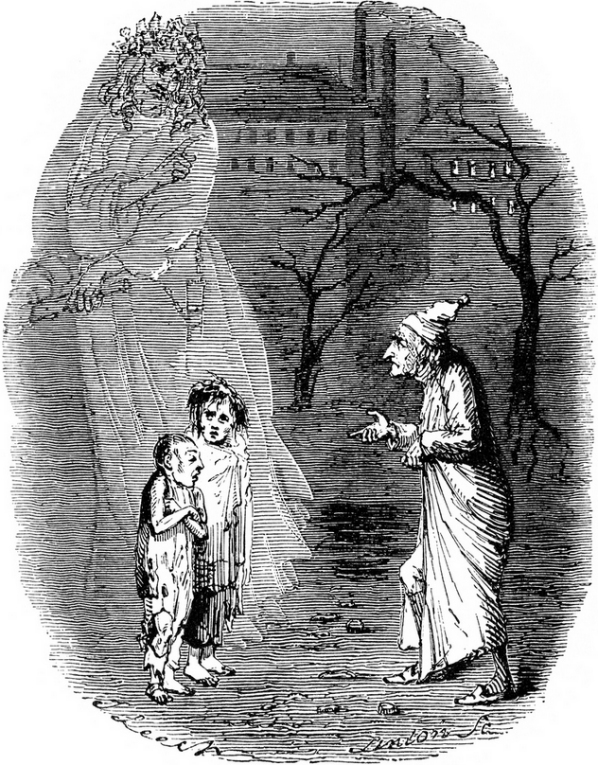
Their names are ignorance and want...

Their names are ignorance and want…


Unrequited Love

unrequited-2070


“The Rowan tree is the tree of psychic protection, and discrimination. …the rowan is about integrity and personal sovereignty.”  The Witches Book of Days


It is the month of Rowan, and what better time to write on the theme of personal boundaries? ‘Womens’ stories endlessly resound with the question of how to nourish others, without losing ourselves. From the baby at the breast, to the care and nurturing of relationships, to the petty drudgery of household tasks repeated ad nauseam, these are women’s duties, women’s concerns, and women’s agonies.

While it is tempting to delve into the question of how much this is women’s nature, and how much is enculturation, it seems pointless, for of a certainty, it is the way it is in my culture and many others. This is not to denigrate men; to deny real, loving men. It is simply to acknowledge this:

“…feminist Germaine Greer described something she sees with increasing frequency: the weeping woman, the woman stopped at a traffic light with tears streaming down her face, or exiting a stall in the ladies room with red-rimmed eyes, or slumped in her seat at the movie theatre, clutching a handful of Kleenex. The weeping is always private, indulged on the sly, and Greer sees the sorrow behind it as a cultural phenomenon as well as an individual one, a reaction to the lingering understanding among women that despite several decades of social change, the world remains largely indifferent, disdainful, even hostile to their most defining qualities and concerns.”

Greer goes on to say that women weep in frustration, at being overworked and underpaid, at attending to the needs of others before themselves. At the men who find it difficult to be intimate, at the continued requirement to always be lowering their expectations, or their standards. “…the power and strength of a woman’s emotions considered pathological or hysterical or sloppy, her interest in connection considered trivial, her core being never quite seen or known or fully appreciated, her true self out of alignment with so much that is valued and recognized and worshipped in the world around her, her love, in a word, unrequited.” (Greer quoted from the book “Appetites”, by Caroline Knapp.)

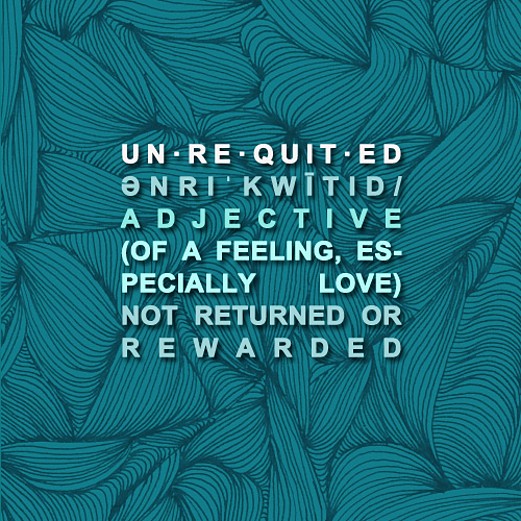
Does this idea of unrequited love strike you, my imaginary friend, as forcefully as it does me? That the warmth of kindness and generosity should have so little value when pitted against accumulation and power? That for love to be genuine, each must value the essential nature of each other?

This is the season to look deeply within ourselves, to understand what we value and why we value it. It is not a simplistic question of individual setting of boundaries, it is a conscious decision to live with integrity: to say I value family, friends, community – connection.  That I affirm their value by living them, no matter how the world may scoff. That I affirm that love is not unrequited by acknowledging that your efforts to make the world – your world – kinder, more generous, more loving is a hero’s quest. Love and strength to my sisters and brothers who share this quest.

Every Cliché of Love Ever Written

What are you doing, my love?

I walk the aisles of the store, and more joyfully, the familiar paths of the forest…I make the bed and sweep the floor and prepare soup for dinner: my homely little tasks serve only to remind me I am not doing them for you. The time passes happily and usefully enough, but when I am with you, oh, with you – then I am fully alive and engaged and the great mystery of the cosmos is ticking over. And I do not understand, save I want to step into the mystery and let its currents take me where they will. Bravery? Stupidity? Naiveté?

“What matter”, says my imaginary friend, rather crossly, “for it is every cliché of love ever written.” Perhaps so, my friend, perhaps so. Though having tested the waters; being willing to step into the stream and see where it takes one would seem to be a fine metaphor for many of life’s endeavours. I try not to speak of trite romanticism here, though, but more about purpose and meaning. Mihaly Csikszentmihalyi speaks of what he calls ‘flow’ – being fully present and immersed enough in an activity to lose sense of time, in an intensely pleasurable way. (Wikipedia has a fine piece on Csikszentmihalyi and his research linked here.) I am captured by the idea, although perhaps I see it in more mystical terms – after all, do not the fairy tales begin with ‘once upon a time’? Is not this sense of time outside of time a part of where mystery and magic reside? Do we step into this time, or step out of our own prosaic earth time?

That’s a question I best leave for now, but I do say this: that the rhythm of our lives can perhaps really only be satisfying when it has its moments of leaving behind human concepts of time and clock and calendar. When sun guides us through our days, and moon lights our evenings, and star fire bears witness to our love and longing. Take my hand, and we shall play in the great wheeling dance of the stars, my love…

I promise.

Nebula_RCW49_04

On Love, In Love

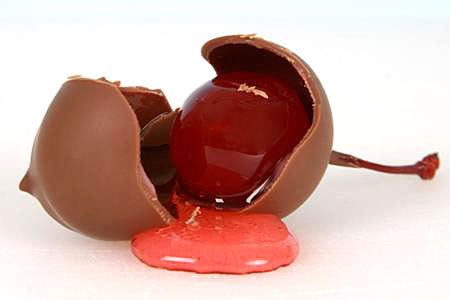
I have written much on the theme of love these past few months, which I think has been leading to this. I do believe I should like to begin with an image of my view of love as the centre of the lovely deliciousness that is life, the cherry, if you will.         cherry-chocolate

My business consultant said to me, many years ago: “You really love your employees.” Given the context of our conversation, it took me a minute or two to respond to him, but the short answer was – yes, and perhaps this was when my inner journey to expand my thoughts and beliefs on love began. Recently my blogger friend Teenage Introvert also wrote a post which contained the line: “Now the struggle is not about ‘trying to love’, it’s more like ‘allowing Love to pour out’, something I cannot explain.”  Between these two points of time lies an immense ocean of immersing myself in the ethos of love.

For all its endless portrayals of happy-ever-after love, western culture decidedly does not celebrate love so much as objectify it…this kind of love, that looks this way, is acceptable; others: suspect. The range of templates for love is narrow…and then there are those of us who believe that love pours out of us, and that this is a natural and desired state of being. The idea does defy explanation, and my attempts to illuminate it will necessarily fall short, but I shall take up the challenge.

As infants, our love begins with parents, and physical reality – being warm, cuddled, soothed, fed, engaged – and expands outwards, slowly but surely, to siblings, home, playmates, teachers, and on. We recognize that not all infants are born into loving circumstances, and this is problematic for learning love; but most of us experience enough, if not ideal love. Does love stop expanding outward for some people, or is it merely the expression of love in the wider world that is curtailed? Perhaps a bit of both.

I find it easy enough to imagine a world where work and work places are so much more satisfying and creative because love imbues co-workers for one another, and for the recipients of their goods and/or services…yes, I hear the sneers and snickers back there. I can easily imagine a world where hospitals and clinics are true healing places because love informs the practice and practitioners of medicine. I can easily imagine a world where friends and acquaintances are not a closed set of like-minded people, but an ever-expanding group of many, because love is the principle of listening and respect for difference. I can easily imagine a world that is more civil, because love acknowledges that people make mistakes, or lack courtesy, but have not lost all value as human beings. I do so hope, my imaginary friend, that you will not construe this as some new age cult of positivism: Be Happy!!!!! , said with too many exclamation marks, and often no acknowledgement that people must grieve, sometimes. Or that it is some version of “turn the other cheek”, for we must stand up to wrongs strongly and ensure our voices are heard. Or that we must accept some boorish behaviour, for the sake of social niceties. I think, I believe that we are born to put love at the centre of our lives, not the periphery, and that this love will pour out of us if we let it. That it is, in fact, the most powerful force in the universe, by whichever name you should wish to call it…

If our love be clouded, or contained, if it does not reach to the stars and beyond, if our love does not shine as surely as the glory of the night skies; why, some integral, essential piece of our human nature is muted. There are other truths about human nature, of course, but it seems to me that this piece, the ability to live in love is the piece most lacking in the puzzle of our current lives. It is not the form and outline of our loves that define us: it is that love pours out of us. To be in love is to be, to really be, at the heart of the deliciousness of life. Romantic notions of love say that some special ‘other’ completes us, makes us whole…I say that the love that completes us and makes us whole is already there, waiting to be let out.

Moo Is Blue


CCF10092014_00000


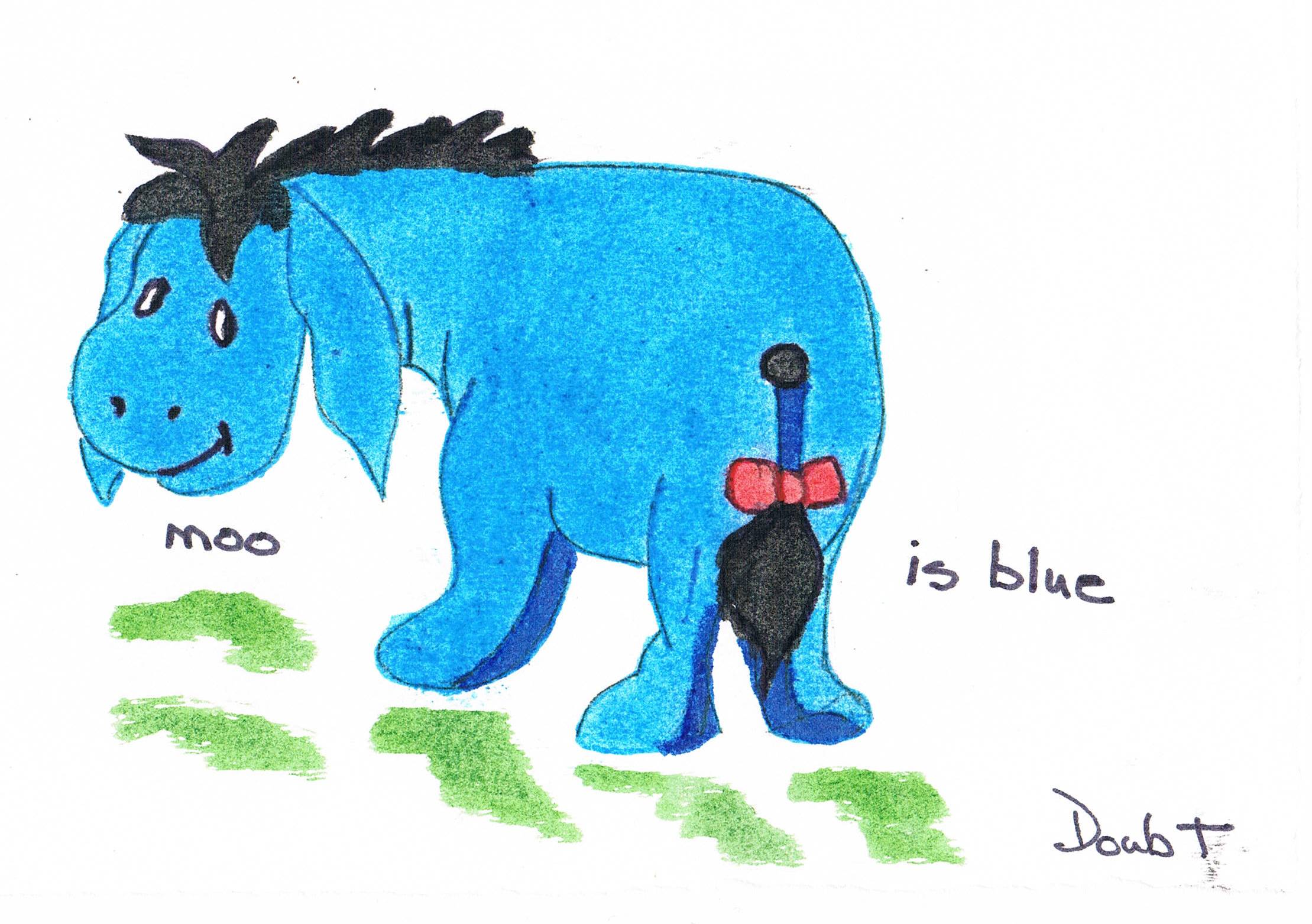
It’s true, I was a little blue when I painted this. But the act of creating something, no matter how small or trivial, (was) is a wonderful tonic. And I confess I love the feel of using the water colour pens almost as much as the flow of my ballpoint pen across paper.

Moo, shortened from lovesick moo, was bestowed on me by a friend some years back, and it seems to have stuck as a name. Apparently, some people are horrified at calling me moo – but me, I just  love the silliness of it. So there you have it: today’s offering, a bit of blue silliness.

I hope, my imaginary friend, that my silliness might inspire yours – or something like that. There have been a couple of days lately when I have found it hard to laugh, but a small dose of silly can always make me smile. Though lest you misunderstand, this is no prescription to ‘think positive’ or some such faux wisdom. It is merely my reflection that when we embrace the blue – because what choice is there, save to bury it away? – some other colours emerge, sooner or later. My palette is never muted, in any case…and that, my friend, is the point.