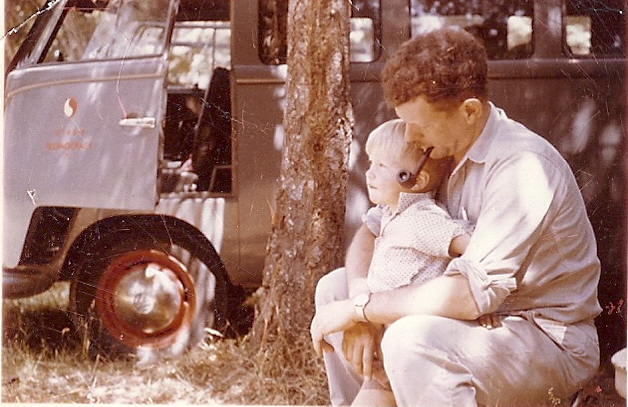
Imagining

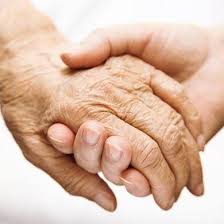
I am watching you struggle to eat a popsicle, mom, a struggle because you are so weak. Yet you manage, and take pleasure in it: its coldness feels good in your throat, you tell me, and then you say thank you. I am anguished seeing your grasp of life relentlessly dimming and fading, and I busy myself with small comforts – a warm cloth for your face, brushing your hair, reading to you. Really I want to rage and curse this idea of health care that has me sitting on a folding chair beside your bed for a few hours, instead of just being with you to the end. It is true that you sleep most of the time, and it is a truism that we all die alone – still my presence at the end of the life of someone I love should be a great gift, participation in one of the few sacred mysteries left in our culture.

I remember, mom, one of your signature sayings when I was a small child: “use your imagination”. You would say this to me often – sometimes when I was bored, maybe, or embarking on an art project or writing a story. Always you held imagination to be the precursor to a rich and fulfilling life, and it has not deserted you in the face of death. And so we talk of going to Honolulu, and how the warm sands and light breezes would feel. We talk of having a party and that there must be a few good-looking men. We talk of dogs, how delightful and wonderful they are and that there should be more of them. We talk of nothing, and yet it is everything.

It is a consolation, I suppose, to think of you imagining the things you would like to do, but it is more than that – it is humbling and awe-inspiring and an evocation of the great mystery of life and death. For just as you shaped your life, you are shaping your death, as you would like it to be.  I leave the care home, and run the gamut of cheerful and chatty staff who unfailingly want to know how I am doing, my imaginary friend. And still I do not rage or curse or weep unashamedly – I am fine, I tell them.

Our world has been shaped, it seems, by those who lack imagination and see no great mysteries around them. But some of us know that we must imagine before we can make things better, and we must acknowledge that some things are a great mystery, not a mere clinical state of affairs. Mom, I wish you warm sands and green meadows where dogs run happily and boisterous parties filled with loud fun. I wish you every joy that you can imagine, with great love and thanks for your inspiration.

a bit of whimsy

Care, and Caring

I visited my mom in her care home today, my imaginary friend. A resident sitting next to her was attempting to articulate a want or need, and after a few minutes of seeing her quiet agitation at being unable to communicate, I went to find a care aide to ask her to help the resident. Forty-five minutes later when I left, no one had come to check on the person. Me, I found it excruciating to leave my mom behind in this putative care. It was gut-wrenching, awful, and felt wrong.

It is hard not to be judgmental, for during those 45 minutes the care aide was not busy, but rather desultorily cleaning up dirty dishes.  Where to start? The residents here are extremely vulnerable: many of them in wheelchairs, and restrained in those wheelchairs, most of them with dementia, some unable to clearly speak their needs, and with varying degrees of confusion. Could it possibly be appropriate to prioritize cleaning up dishes over spending a moment with a resident? Of course, not all of the staff exhibit this level of indifference – earlier another staff member offered someone juice and a cookie, and chatted with her to ease her confusion and disorientation. But perhaps the point is that those residents today, including my mom, are left for the next 7 hours or so with indifference.

As a society we have only begun to grapple with these issues in long term care; care aides are expected to do too much, with too few of them available, and with mediocre wages for what is difficult and emotionally demanding work. It seems we have focused efforts on the mechanics of the situation – increasing wages, recruiting, hiring, and training more care aides – without figuring out how to measure what seems absolutely indispensable to the job, which is caring.

My mom is often told by staff that she is at home, but at a deep level she understands this is not true. Home is not a place of perfection, or a place of fictionalized, sentimentalized happy people laughing and playing games. Home is messy, has good days and bad days, joys, sorrows, arguments, and laughter – home has many aspects. Caring, rather than care, is what ought to define home.

For the sake of my mom and your mom and somebody’s husband, sister, life-long friend – for the sake of all those who cannot care for themselves or speak for themselves, we must get this right. How will we live with ourselves otherwise?

Social? Media

Like others – and ultimately, billions of us – I flocked to various social media in their early days and loved the experience. I played games, made videos, chatted with strangers, shared pictures and selfies and snippets of my day. I wrote about things close to my heart, heard breaking news, and discovered musicians and artist and thinkers. And then, like many others, I stopped loving it.

Much has been written about the woes of Facebook and Twitter lately, though it seems unfair to single these out. Most social media seem determined to serve us up what they think we want, based on whatever mysterious algorithm rules their processes – or perhaps, whichever billionaire owns them. The results have been disastrous, some would say – but certainly the pandemic, in particular, brought many things to our attention: the rise of disinformation and misinformation, outrageous and hateful speech, more polarization in politics, the distinct decline in value of what it means to live in a democracy, not to mention foreign entities interfering in democratic elections…I suspect I could go on at great length, though that seems unproductive. The great joy of social media for me was to discover others not like me – people in different countries and cultures, people who vote differently, whose daily lives are far removed from my own – and yet, in spite of these differences to feel kinship with a fellow human. To be able to disagree with grace and politesse – for it is not on those points with which we agree that we are able to expand our limitations. I think the promise of social media was to enlarge our communities, while in the end, most platforms created more silos, more division, more gated communities.

I have not deleted any of my social media accounts, though I find myself using them infrequently. I have moved to a new (to me) version of social media called Mastodon. There is a learning curve to new media, and I am not the right person to explicate this! There are many excellent articles on the web, however, on the overall structure and navigation – Mastodon divides itself into servers, and when you create an account you must choose which server to join. On the other hand, you can interact with people from all servers, and also change servers at any time. It is what Mastodon does not have that is probably most important: no algorithm elevating certain content, or advertising – and that may be its most important feature, although no one billionaire owner perhaps another. In my very brief space of time there, I have been extraordinarily impressed with tone and content and sheer kindness – so vastly different than so many other platforms right now. It is early days for me, and Mastodon is experiencing massive growth as the dumpster fire at Twitter continues – a bumpy ride. Still, it seems invigorating to be part of creating a better social media experience, and I will keep you posted, my imaginary friend. If you make the leap, you can find me at https://mstdn.ca/@VivianLea

A Charm, A Salve…

In honour of Samhain – or Halloween, whichever you prefer – I offer up an incantation, my imaginary friend. This marvelous poem, written by Alexander Hutchison, is indeed called Incantation, and is best spoken aloud, at midnight or whenever you prefer – perhaps as a kind of primal scream of beautiful language to banish trolls and goblins and other such wicked manifestations. Hutchison said “while wishful thinking doesn’t do it, a proper determination can make the cosmos perk up and take a bit of notice.” Here is my determination…


Incantation

I have a charm for the bruising

a charm for the blackening

a charm for cheats and impostors.

I summon from the cold clear air

from the bare branches of the trees

from worms coiling under the ground —

charm against cruel intent

charm for neglect

charm against wicked indifference:

may it lie on the white backs of the breakers of the sea may it lie on the furthest reaches of the wind.

A salve for those who would grudge against the poor a salve for those who would harry the innocent a salve for those who would murder children:

may it lie in the stoniest stretches of the hills may it lie in the darkest shelving along the shore.

A salve for those that would cram

whatever life they have with possession — for the rage of owning without entitlement for the desperate murderous possession of things:

may it lie on the cloud-banks that range across the sky may it lie on the face of Rannoch Moor in its remoteness.

A charm against mystification by doctors a charm against deception by the self-appointed a charm against horrific insistence:

from the breeze that stirs the last of the yellowing leaves from the slanting of the sun as it falls through the window.

a salve against grasping

a salve against preaching

a salve against promises exacted by threat.

              Grace of form

              grace of voice

              grace of virtue

              grace of sea

              grace of land and air

              grace of music

              grace of dancing.

A salve against the uselessness of envy

a salve against denial of our own best nature a salve against bitter enmity and silence.

              Grace of beauty

              grace of spirit

              grace of laughter

              grace of the fullness of life itself.

A salve to bind us

a salve to strengthen heart and happiness:

may it lie in the star-blanket there to spread over us may it lie in the first light at the waking of day.

Stardust

The vast sorrow and fear of the past few years has threatened to overwhelm us at times, many of us, my imaginary friend. And also for many of us the particular and personal grief of losing loved ones has taken place in a stormy sea of collective anguish that has made the personal seem self-indulgent, somewhat. But today I learned of your imminent death, my friend, and it does not seem my sorrow can be contained.

The remainder of your life will be measured in weeks, but you took the time to have a long conversation with me about your death, and how you have orchestrated it – your palliative care, your request for medical assistance in dying, your family and friends who are spending time with you, a dozen other small details which illustrate the grace with which you approach your death. You have not had many days to come to terms with this yourself, but your love and care and concern for those you will leave behind is evident, as is your courage. Our conversation ended with my telling you I needed to go cry – though if I could take those words back I would. I did shed a few tears, but here is the thing – you are still alive and you are choosing and you are shaping a vision of your death just as you did with your life. It feels as if the least I can do is to save my tears and express my deep appreciation for that grace and courage and a wonderful conversation that explored the meaning of life and death in a way that can never be forgotten.

I told you not so long ago that we would be friends until one of us is no more, but I think we will always just be friends. Half a lifetime of adventures together, from the silly to the profound and everything in between, have shaped our lives and the lives of those close to us in ways that cannot be observable or measured, but that shall reverberate still. We are stardust, in the poetic, the cosmic, and the very real sense of what we are made of, and I shall choose to think that you and I will return to that vast ocean of collective love and oneness with all beings.

And so I propose that we meet up here, my friend.

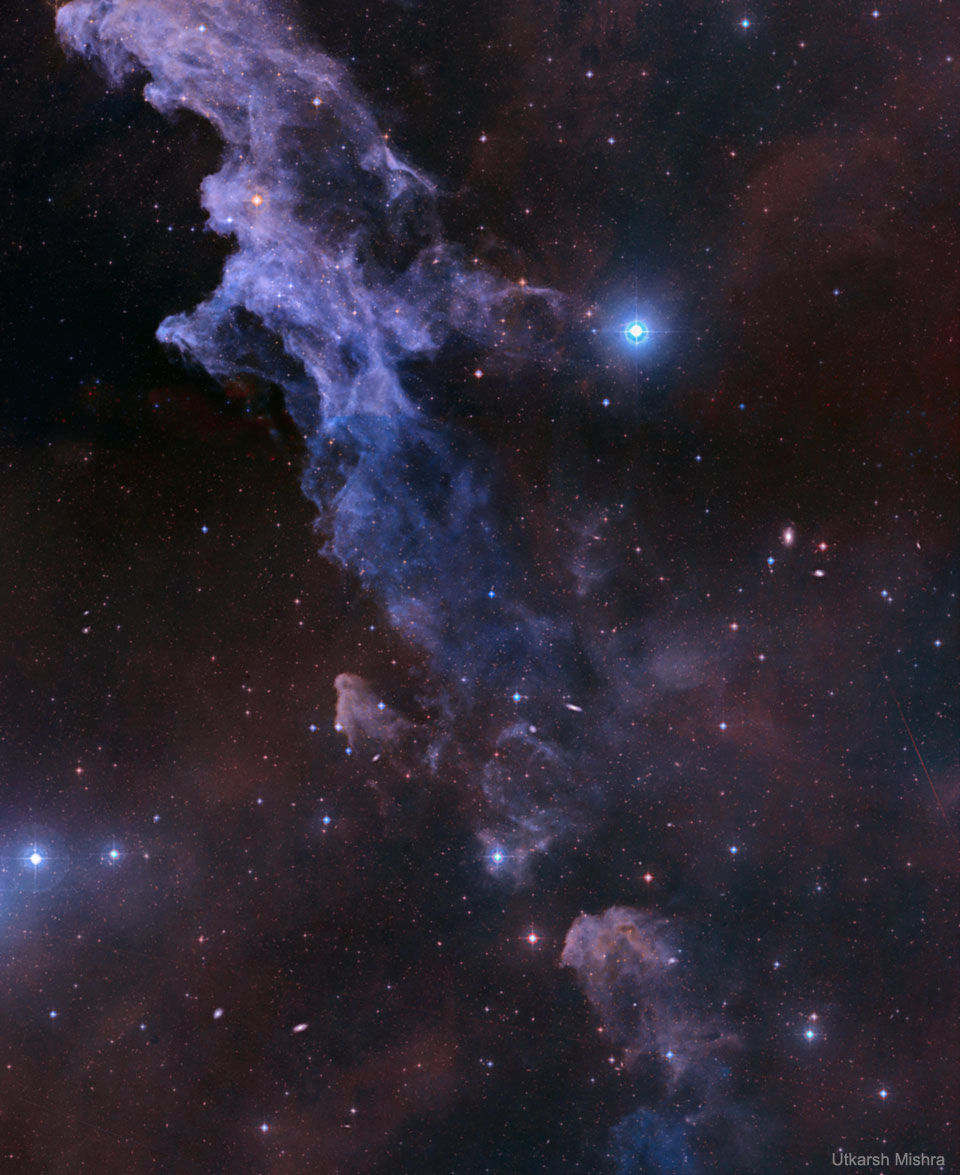
image Credit & Copyright: Digitized Sky Survey (POSS II); Processing: Utkarsh Mishra

The witch head nebula, in the constellation of Orien, about a thousand light years from earth, I believe. I don’t know when I will get there, but until I do I will see brightly shining Rigel and think of you, and hold you in my heart as tightly as I can. I can see you striding that constellation with your sense of wonder and curiosity…

Merry meet, and merry part, and merry meet again. Blessed be.

Dad

(originally published June 2014)

“In one of the stars I shall be living. In one of them I shall be laughing. And so it will be as if all the stars will be laughing when you look at the sky at night..”

Antoine de Saint-Exupery, The Little Prince

“Dad” is a very special word in my lexicon, though I think perhaps my sense and attributions and nuanced feelings of the word carry few of the common cultural stereotypes. For my dad was not the breadwinner, or the head of the household, or the fearful patriarch. Never did he mete out punishment, raise his voice, or lay down the law.

My earliest memories of dad…He is building my playhouse, and I help. He is putting up my swing set, and filling the big pool. He is taking us to the lake to swim on a very hot summers’ day. Always, always, when he comes home from work he plays with me. On Saturdays, we go to the Crown Point hotel for orange floats – was there ever anything so delicious? We hike, and explore, and bash rocks. (He liked to prospect in his spare time.) He makes me a hot drink every night before bed: brewer’s yeast, molasses, and boiling water. His best friend Les is always at our house, and he is as kind and funny as my dad.

Even when I was very young, I understood that my dad was different. For at my best friend’s house, we were told  to be quiet and stay out of the living room when her dad came home. At another friend’s house for dinner, her dad helped himself first and everyone else  waited. (At my house, my dad made sure his kids ate first.)  Dads were a little distant, and a little fearful in those days, and often reflected the privilege of being male. In fact, my only remembrance of my dad raising his voice was to a male houseguest of ours: “Don’t yell at my daughter!” I was eleven, and it was the first time I remember him angry at a person.

My dad was political, though in a distinctly non-partisan way – he spoke of the cruelty and injustices of the economic system, and the failures and foibles of the politicians, of the way that things might change for the better. When he spoke of these things, we understood that he was speaking of a more egalitarian, democratic society, a culture and an economy that was built around the needs of all people. At the age of ten, we listened together to the federal election results on the car radio – even while on a family vacation – and the importance of thinking about, and participating in the political ideas of the country was forever ingrained in me, along with a love of CBC Radio. Even when he was deeply serious, however, humour and playfulness were never absent.

I am not sure how old my dad was when he built his model railroad village in his basement – somewhere around the age of retirement, anyway. He said he’d always wanted a train set as a kid, and so he built an elaborate one, complete with tunnel through the adjoining pantry storage, and incredibly detailed  village, town, and scenery – a model of whimsy and creativity and play that I hold in my heart with a smile. Of course, us kids were all adults then, but we all remember playing trains with dad. When my dad died, among other things he left a carefully collected library of some five thousand books, and I remember looking over and choosing books with a visceral imprint of the intellectual legacy I’d been left: the greatest authors of five decades, fiction and  non-fiction, but above all, the world’s great thinkers. As time passed, however, I came to see my dad’s legacy in an even more tangible way: my brothers’ kindness, humour, and patience with their kids, love shining out of their faces.

Above all else, dad, I remember you laughing, and I do look at the stars at night and hear you laughing. I am grateful for the love of learning, the love of the wild places, and the teaching of kindness in everything…my heartbreak remembers your laughter, and is comforted. See you over there.

Jacob Granite Doubt

Phil Doubt wrote these beautiful words of memory for his son Jake, an unimaginably difficult task for any parent. I would like to acknowledge his strength and love.


March 27, 1997 – June 12, 2021

Jacob earned the nickname “Monkey Boy” as a toddler for his relentless inquisitiveness and inexhaustible exploration of the nooks and crannies of his world. Monkey Boy’s budding sense of humour was evident too, as he feigned ignorance of the word “no” for many years. Jacob carried these traits through youth and into young adulthood. As a young man, he was wild, free, and utterly fearless. He was fiercely loyal to family and friends, and he challenged us with his intelligence and amused us with his unique wit. And truthfully, he never admitted to understanding the word “no”. As dust has returned to dust, we will cleave to these memories, and perhaps smile too, as Jacob wanted us to believe that

In one of the stars I shall be living.
In one of them I shall be laughing.
And so it will be as if all the stars
were laughing, when you look at
the sky at night.

(Antoine de Saint-Exupery)

Jacob will be missed and loved by his parents, Phil and Cindy Doubt; his sister, Emma, and his baby niece, Heaven Lea. He is forever surrounded by a loving extended family, and a swath of friends across the country. A private Family Service will be held for Jacob at Choice Memorial in Calgary, and a larger gathering will be announced later. If you wish to honour Jacob’s memory, read any of Dostoevsky’s works, or perhaps “Into the Wild” by Jon Krakauer. In his younger years, Monkey Boy loved the Berenstein Bears and the Hardy Boys. The Calgary Public Library is accepting donations in his name. In lieu of flowers and if friends so desire, donations may be made in Jacob’s memory directly to the Calgary Public Library Foundation, 800 – 3 Street SE, Calgary, AB, T2G 2E7. We thank everyone for their love and support. To view and share photos, condolences and memories of Jacob, please visit www.choicememorial.com.

Jake

Golden Autumn Afternoon

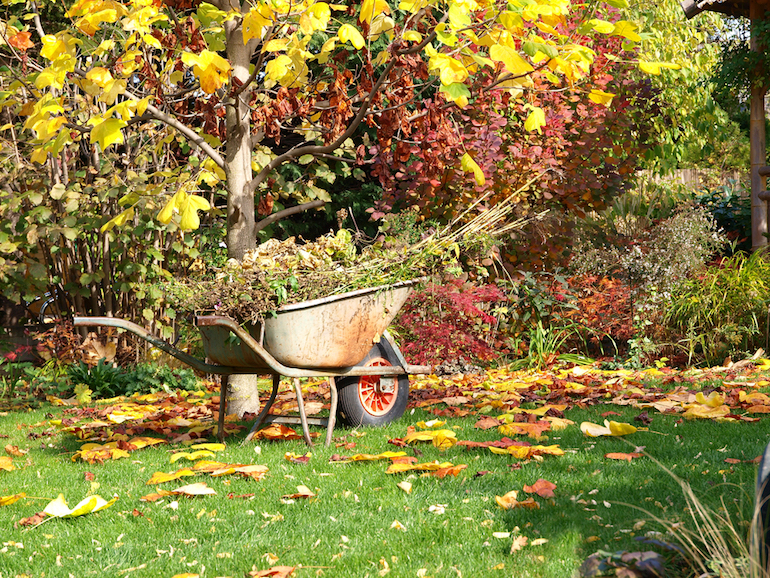
A sparkling warm November day, just enough of a chill to remind one of the passing of summer… The prosaic chores of the garden – pruning the delicate little Japanese Maple whose limbs seem somewhat ungainly, bare as they are of leafy covering. The satisfaction of a newly-purchased pair of offset pruners; clean, effortless cuts and the shaping of nature to a more tamed presence in this tiny suburban enclave – the tree is a thing of marvelous symmetry now. The rustle and crackling of leaves to be removed from gutters, raked from paths, and settled into garden beds to provide cover for plants and birds in the cold months to come. The garden looks to be slumbering, for the most part, though some brilliant late season climbing roses splash blooms across the fence. It is not the exuberant, multi-hued show of colour of the light half of the year, but the pleasing shapes and bones of the garden, the muted yet glorious autumn colours, the visceral sense of quietude and readying are a different kind of tonic and respite. Thickets of various shrubs, bright with berries to feed the birds, groupings of lingering flowers in sheltered spots: these are tonic. The palpable sense of repose, the winding down of summer’s frenetic energy – perhaps best of all, no sound of mowing or blowing machinery: this is respite. An afternoon in the autumn garden may be a marvelous metaphor for what our collective spirits require…


Yet who am I, to suppose a cure for the world’s ills? Nevertheless, this much I shall assert: that slowing down to enjoy the grace of everyday tasks, and the humble beauty we create and sustain is vital to human lives, as is some everyday quiet, some respite from the world of frenetic, mindless, unending ‘work’ that we are increasingly absorbed in.


I wish you a golden autumn afternoon, my imaginary friend. Some place and space where time slows down, where you lose yourself in the pleasure of homely tasks, where you end the day giving thanks for the joy of being merely alive.

autumn garden

Oh, April…

Oh, April…


April is the cruellest month, breeding

Lilacs out of the dead land, mixing

Memory and desire, stirring

Dull roots with spring rain.

Winter kept us warm, covering

Earth in forgetful snow, feeding

A little life with dried tubers.

Summer surprised us, coming over the Starnbergersee

With a shower of rain; we stopped in the colonnade,

And went on in sunlight, into the Hofgarten,

And drank coffee, and talked for an hour.

∼  excerpt, TS Eliot, The Wasteland


The lilacs outside my door are poised: soon they will blossom forth, but not yet, oh, not yet.

And this is how I feel, my imaginary friend – not here, not there, not yet. Memory and desire swirl around me, bringing up new budding tendrils each day; around me a vast sea of the barely-glimpsed colours of unopened flowers, while a lowering grey sky hems me in, viscerally. April’s refrain: not yet, not yet, not yet.


april rain 2

Winter Solstice, 2018

Today gives us sunshine, here in my particular piece of the Northern Hemisphere, and a reprieve from howling winds and slashing rain. How appropriate, on this day to mark the return of the light. The skies have been dark and lowering, and have seemed to hem us in to smaller space – and now, viscerally we unfurl and stretch and luxuriate, however briefly. 


Yes, this day marks the first day of winter, my imaginary friend, and the longest night of the year; but it also marks the fact that the days grow ever longer from this point to the summer solstice. I am reminded of Janus, that Roman god of portals and doorways, the god who looks forward and backward at the same time. Even as we enter the northern winter, and nature around us seems at a standstill, underground the work of preparing for the vibrant growth of spring carries on …roots burrowing deep into soil to build a strong framework, this burrowing, hibernating, and seeming rest simple a less visible energy. As Janus reminds us, to move forward one must remain firmly rooted, whether to build anew or to make radical change. 


The ancients, it seems had a way of acknowledging the solstices, the equinoxes, the cross-quarter days as portals of movement around the wheel of the year – the seasons of the year as circle, the years as circles that spiral, the spiral itself a potent symbol of ever-upward movement that rests upon what went before. 


‘Tis a symbol that resonates powerfully for me. May you find light and cheer in this festive season, and discover the wonder and beauty in nature’s quietness. Blessings of the solstice. 


Pincer Tree, photographed by John Lake.