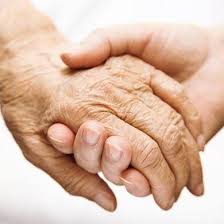
I visited my mom in her care home today, my imaginary friend. A resident sitting next to her was attempting to articulate a want or need, and after a few minutes of seeing her quiet agitation at being unable to communicate, I went to find a care aide to ask her to help the resident. Forty-five minutes later when I left, no one had come to check on the person. Me, I found it excruciating to leave my mom behind in this putative care. It was gut-wrenching, awful, and felt wrong.
It is hard not to be judgmental, for during those 45 minutes the care aide was not busy, but rather desultorily cleaning up dirty dishes. Where to start? The residents here are extremely vulnerable: many of them in wheelchairs, and restrained in those wheelchairs, most of them with dementia, some unable to clearly speak their needs, and with varying degrees of confusion. Could it possibly be appropriate to prioritize cleaning up dishes over spending a moment with a resident? Of course, not all of the staff exhibit this level of indifference – earlier another staff member offered someone juice and a cookie, and chatted with her to ease her confusion and disorientation. But perhaps the point is that those residents today, including my mom, are left for the next 7 hours or so with indifference.
As a society we have only begun to grapple with these issues in long term care; care aides are expected to do too much, with too few of them available, and with mediocre wages for what is difficult and emotionally demanding work. It seems we have focused efforts on the mechanics of the situation – increasing wages, recruiting, hiring, and training more care aides – without figuring out how to measure what seems absolutely indispensable to the job, which is caring.
My mom is often told by staff that she is at home, but at a deep level she understands this is not true. Home is not a place of perfection, or a place of fictionalized, sentimentalized happy people laughing and playing games. Home is messy, has good days and bad days, joys, sorrows, arguments, and laughter – home has many aspects. Caring, rather than care, is what ought to define home.
For the sake of my mom and your mom and somebody’s husband, sister, life-long friend – for the sake of all those who cannot care for themselves or speak for themselves, we must get this right. How will we live with ourselves otherwise?


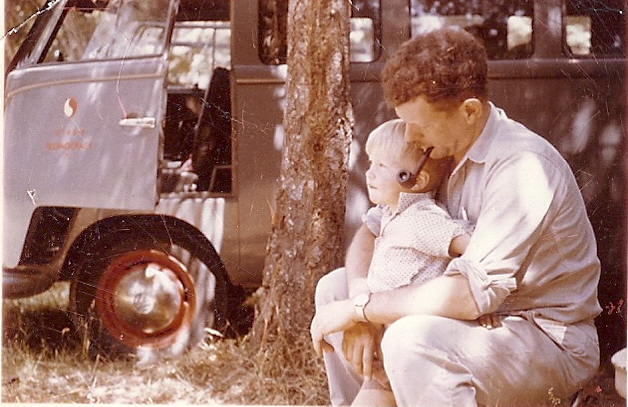




 Me, and my imaginary friend