Dad

“In one of the stars I shall be living. In one of them I shall be laughing. And so it will be as if all the stars will be laughing when you look at the sky at night…”

Antoine de Saint-Exupery, The Little Prince


“Dad” is a very special word in my lexicon, though I think perhaps my sense and attributions and nuanced feelings of the word carry few of the common cultural stereotypes. For my dad was not the breadwinner, or the head of the household, or the fearful patriarch. Never did he mete out punishment, raise his voice, or lay down the law.

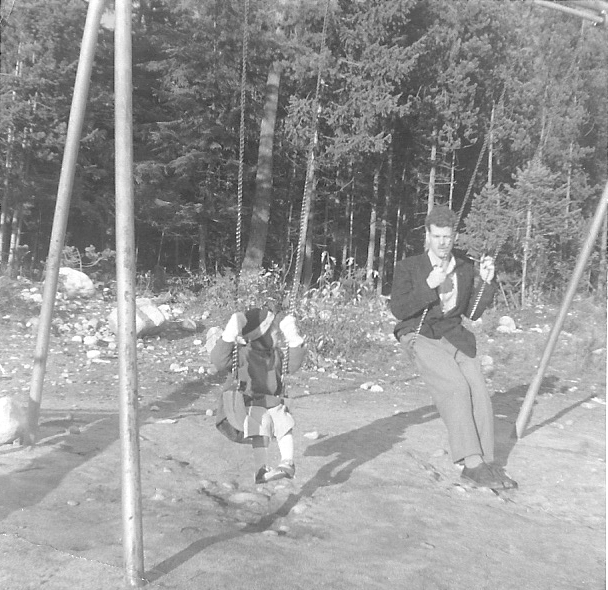
My earliest memories of dad…He is building my playhouse, and I help. He is putting up my swing set, and filling the big pool. He is taking us to the lake to swim on a very hot summers’ day. Always, always, when he comes home from work he plays with me. On Saturdays, we go to the Crown Point hotel for orange floats – was there ever anything so delicious? We hike, and explore, and bash rocks. (He liked to prospect in his spare time.) He makes me a hot drink every night before bed: brewer’s yeast, molasses, and boiling water. His best friend Les is always at our house, and he is as kind and funny as my dad.
Scan_Pic0373

Even when I was very young, I understood that my dad was different. For at my best friend’s house, we were told  to be quiet and stay out of the living room when her dad came home. At another friend’s house for dinner, her dad helped himself first and everyone else  waited. (At my house, my dad made sure his kids ate first.)  Dads were a little distant, and a little fearful in those days, and often reflected the privilege of being male. In fact, my only remembrance of my dad raising his voice was to a male houseguest of ours: “Don’t yell at my daughter!” I was eleven, and it was the first time I remember him angry at a person.

My dad was political, though in a distinctly non-partisan way – he spoke of the cruelty and injustices of the economic system, and the failures and foibles of the politicians, of the way that things might change for the better. When he spoke of these things, we understood that he was speaking of a more egalitarian, democratic society, a culture and an economy that was built around the needs of all people. At the age of ten, we listened together to the federal election results on the car radio – even while on a family vacation – and the importance of thinking about, and participating in the political ideas of the country was forever ingrained in me, along with a love of CBC Radio. Even when he was deeply serious, however, humour and playfulness were never absent.

I am not sure how old my dad was when he built his model railroad village in his basement – somewhere around the age of retirement, anyway. He said he’d always wanted a train set as a kid, and so he built an elaborate one, complete with tunnel through the adjoining pantry storage, and incredibly detailed  village, town, and scenery – a model of whimsy and creativity and play that I hold in my heart with a smile. Of course, us kids were all adults then, but we all remember playing trains with dad. When my dad died, among other things he left a carefully collected library of some five thousand books, and I remember looking over and choosing books with a visceral imprint of the intellectual legacy I’d been left: the greatest authors of five decades, fiction and  non-fiction, but above all, the world’s great thinkers. As time passed, however, I came to see my dad’s legacy in an even more tangible way: my brothers’ kindness, humour, and patience with their kids, love shining out of their faces.

Above all else, dad, I remember you laughing, and I do look at the stars at night and hear you laughing. I am grateful for the love of learning, the love of the wild places, and the teaching of kindness in everything…my heartbreak remembers your laughter, and is comforted. See you over there.

Scan_Pic0288

GYPSY

Bela Johnson's avatarbelas bright ideas

The old woman clasps worn cards wearily to grizzled chin,

vertical lines set deep as piercing black eyes etched

into an apple doll face.

Sweeping swollen arthritic fingers over lined forehead,

drumming now, listening to the hollow sound

of bony digits echoing against her skull.

Tapping, tapping flat cards to the thrust of jaw

ever so gently yet persistently knowing,

as she did,

the message contained within the deck’s images

cast long ago from a stranger’s mind onto paper.

Fear arises, wells up inside her throat,

recalling faces beyond memory

castigating, infiltrating, immolating,

angry as the fires of hell that she knew

more accurately than themselves

their own path unfolding.

What the men wanted and what they got,

whether from her pack or between her sheets,

seldom elicited gratitude;

rather envy and scorn surged

from the recesses of dull minds

expecting picture-book angels,

unready and unwilling to accept

the too-human…

View original post 4 more words

What Stories Will You Live? What Stories Will You Tell?

Today’s blog post is brought to you by the book “Monoculture: How One Story Is Changing Everything”, by F.S. Michaels. Michaels begins with the proposition that a “master story” is a governing pattern for a culture, and uses the examples of the religious monoculture in 16th Century Europe, which then gave way to the scientific monoculture. In our time, she says, the monoculture is economic, and provides chapters on how work, relationships, community, health, education, and creativity are shaped by economic values and assumptions in the 21st century. This is a well-written book, easily readable at 134 pages, and with 55 pages of notes, clearly well-researched. I do not know F.S. Michaels, but I enjoyed the book immensely, several times. The moment for readers when they come across a piece of writing that articulates something in themselves, half-formed/inchoate, in marvelous lucid fashion, is akin, maybe, to seeing a friend in a crowd of strangers.

“Call a thing immoral or ugly, soul-destroying or a degradation of men, a peril to the peace of the world or to the well-being of future generations; as long as you have not shown it to be ‘uneconomic’ you have not really questioned its right to exist, grow, and prosper.” It is worth asking you to read the quotation again; it is from the late economist E.F. Schumacher. This is the world that has come to pass: a world in which the vilest child pornography thrives, because it is economic. In which hunger and homelessness abound, because it is economic. (To clarify, it is widely believed that it is uneconomic to rectify homelessness/hunger.) In which climate change begins to pose real questions of how humans will survive, yet no governments can seemingly conceive how to begin to solve the problem, and where will the money come from? And this is worth thinking on: how could a story, an idea, come to be so pervasive that we allow it to threaten all life on earth?

There have always been those of us who don’t believe the story, of course, who don’t see ourselves first and foremost as ‘economic man’. Those who don’t believe, but pretend to, form a percentage as well, and how shall we ever know how many these are? For the one certainty is that the economic story is central to our very survival, though tangential to our real lives. And here is where my story becomes personal, in a way that is not altogether comfortable to tell.

I have never been able to make economic decisions at the cost of some commitment to the truth, or to doing the right thing, to some higher good, or to creativity and imagination. In my first job I was hired at X wages as a hotel housekeeper. My employer praised my work, and within days I was promoted and training all the new hires, a considerable number. I was really enjoying my first foray into the world of work until my first paycheque, when I discovered that the employer was paying me less than agreed upon. My appeal to fairness fell upon deaf ears, so I complained to Labour Standards, and my complaint was upheld, for the offer was in writing. I was out of a job, however. When I began my own business some years later, I researched the prevailing wage rates and decided to pay my employees at the highest (union) rate for the work. My business grew quickly, had the major market share, and enjoyed a profitability ten percent higher than the competition. Imagine my surprise, then, in applying for a minor line of credit, to be required to defend my higher than average wage costs. In fairness to the Credit Union lending committee they granted my line of credit, but I was forced to state the obvious: that paying a living wage and keeping employees, rather than seeing them as disposable labour, was integral to my sense of doing ‘good business’. I’ll offer up one final story: as the newly-hired executive director of a non profit arts organization, I discovered a number of uncomfortable things. Such as the ten thousand dollars as a specific grant for one purpose apparently having been spent – well, elsewhere. No membership list, although membership was paid, no filing system, no information about such basics as how much was in the bank account and insurance. A government body demanding information from me about a Record of Employment for a previous employee that it believed to be questionable. Meanwhile, the board declined to act or to fulfill their obligations under the Societies Act, and my insistence that integrity was crucial to the existence of the organization got me fired, though I would have been forced to resign in any case.

I tell these stories because it is self-evident that there are principles of fairness that matter, maybe even more than ones’ livelihood. Or as F.S. Michaels puts it: “When what we once valued intrinsically – truth, beauty, goodness, justice – becomes just another means to an economic end, and we accept life within the monoculture, we are deprived of our higher-level human needs.” I cannot pretend to have the answer for how anyone else lives their life, but I can comfortably assert that we must begin to look at human needs beyond the economic. That truth and beauty and goodness and justice really do have a transcendent value. That we really cannot eat money. That the world cries out ‘let me live’.


“The choice is yours.

What stories will you live?

What stories will you tell? “


My thanks to F.S. Michaels.

A Beautiful Object

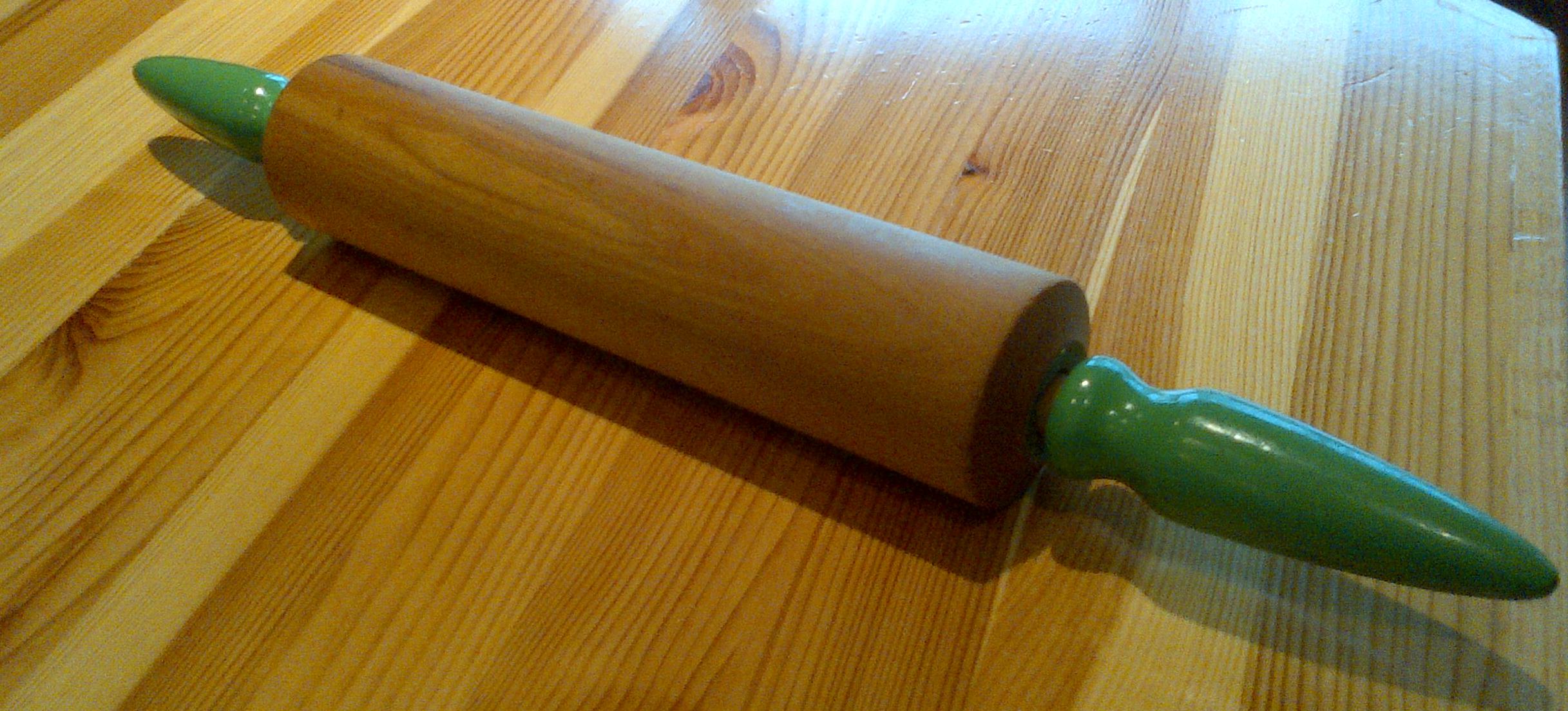
I’ve been wanting to write about this rolling pin for a while now, my imaginary friend. It came from a lovely little shop called Cottage Fever –  it caught my eye because I use these things, but also because it was beautifully cared for. I am guessing the rolling pin is more than fifty years old, without a nick in its painted handles and its surface oiled and unmarked. It  has quickly become one of my favourite tools; and you will be pleased to know that I endeavour to take equally good care of it.

rolling_pin

Of course, I don’t really know the story of the rolling pin. I’ve seen many of them around, in vintage and second-hand shops and flea markets, though never one as well cared for as this, and I think there is a story here. Well, there are probably many stories…I caught myself and still catch myself wondering about the person who owned this thing and who clearly loved it. I understand why s/he loved it – it is beautifully balanced, made entirely of wood, and a joy to use. Why it came to be sold, given away, or discarded is another mystery. Although I use different rolling pins for different doughs,  it really would not be possible to buy something new that is better than this almost-antique – and that is terribly sad. We have become a culture where it is possible to buy anything, where technology is amazing and life-changing, where stuff is everywhere – and yet, the idea of things that last, that might be passed on to another generation seems laughable.

It is true that there is an emerging consciousness of ‘artisan’, which has mostly been confined to the realm of food and drink. But even as mass manufacturers and fast food places have co-opted ‘artisan’ for their branding slogans, the word becomes difficult to use…There is also a movement called maker culture, which seem to be very rich and eclectic and busy making, re-making, recycling, and up-cycling everything from clothes to furniture to art. Maker culture tends to be marginalized and artisan has been co-opted, but unquestionably these ideas and others can show us the path to a beautiful, fuller life.

To go back to the story of the rolling pin, the person who owned it had time. Time to bake things from scratch, but also time to take care of the tools at the end of the day. It is certainly true that fifty years ago, around the time the rolling pin was born, almost everybody cooked from scratch, partly because there was not the plethora of packaged and regurgitated food available that there is today. So there was more time, and better food…This is not meant to be nostalgia for time past, however. The most likely story is that the rolling pin belonged to a woman, that she did not work outside her home, or at best, part time, and that her husband worked at a job that paid sufficiently to buy the family necessities. This is most likely simply because statistics tell us that life was like this for the middle majority at that time, but it is not an argument for a return to this version of time past.

What it is an argument for is a life filled with some small beauties and depth and flavour, of enough time to spend a few hours baking something special. Or enough time to make, or remake from the thrift store, a pleasing piece of clothing. Time to plant a garden, and time to tend it. Time to preserve the fruits of that garden. Maybe most importantly, time to smell the roses in the garden – time that is unscripted, unproductive, and gloriously soul enlarging. This kind of time is rare in our culture; not only does it have little value but it is actively denigrated by those who are ambitious and status-driven and dollar-defined. My rolling pin has little value for them, either. But for others, the rolling pin could be a metaphor for much that is missing in our lives, and a reminder that living with less might actually be living with more.

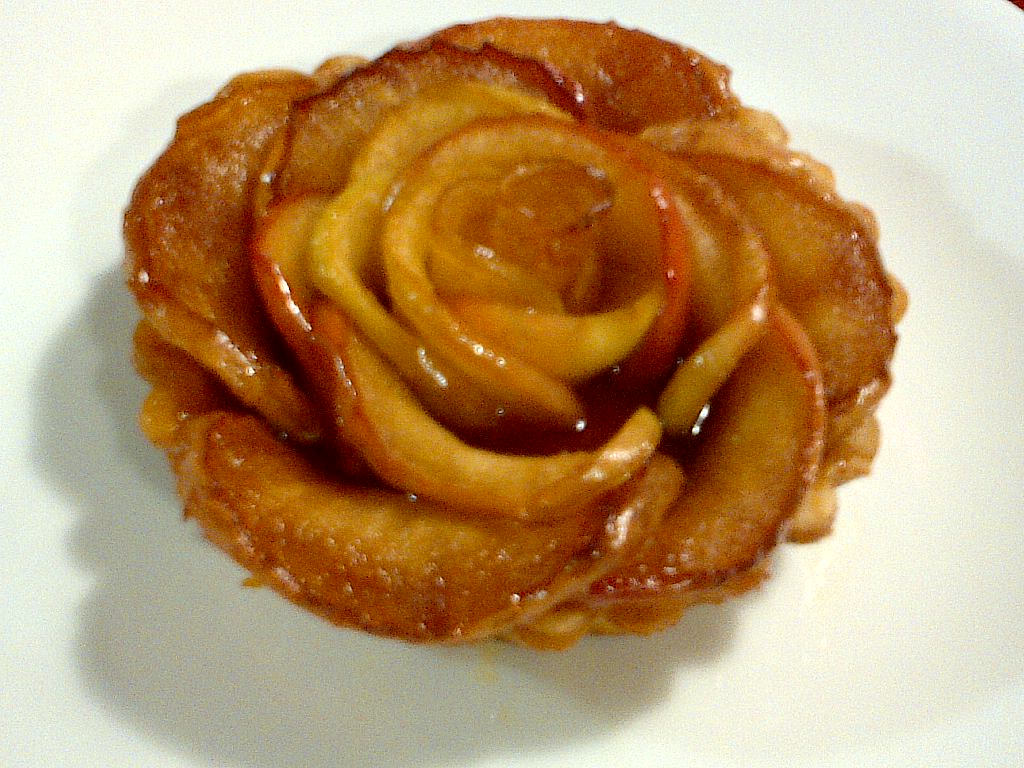
I will leave you with a picture of my most recent creation with the rolling pin. These were not particularly time-consuming – but I have a bit of practice! The impetus was to spend an hour or two being creatively engaged – and, of course, dessert, which is a rarish indulgence here. For me, the rolling pin and the fruits of my labour are a personal response to the threats of climate change, our landfills overflowing with food packaging, generations searching for the meaning of life in meaningless jobs and endless commutes…just so. It seems to me that the way forward, the intelligent response to these very real crises, is for each of us to make the time and place for objects of beauty and creative engagement, in whatever way is true to ourselves. To reclaim a portion of our time from popular culture, from consumer products and passively consumed entertainment. To expect more, while choosing less.

096

~. Birds To Wind

I am sharing the words of Laz to inspire me…as always.

lazfreedman's avatarLaz Freedman's Poetry Blog

Pen

To                                          

Paper,

As

Birds

To

Wind

>>>>>>>>>>>>>

By Laz.F.30/11/2010

View original post

Yule Tidings

Dear Santa,

I write on the very afternoon of the winter solstice: the earth now at the point where the northern hemisphere is at its furthest tilt from the sun. And so we celebrate the return of the light, for every day grows slightly longer now, even this day. Thus it has been for many thousands of years for us humans, a time for stories and feasting and the light and warmth of home and hearts made joyous by the love light shining.

I write a little early this year, for I know you are saddened by recent controversies in your name. There was a silly woman who insisted you are white, and an equally silly man who insisted that you don’t exist, and likely a few other gems I have overlooked. I don’t think you are white, for the books all say you are rosy. And of course, we know you exist, for we collectively imagine you into being every year, and millions of children await, and have awaited your generosity, and are better people for understanding generosity. We need you and your magic more than ever. Sigh. I think perhaps I have written those words before. Never mind, there are bound to be some repeats in all these years of letters to Santa.

Anyway, here is what I am asking for: a little more of ‘out of the ordinary’. There was a time before you, Santa, when it is said that Yule celebrations lasted for weeks and even months. Now it is mostly reduced to one day that is set aside from the ordinary. On that day we shine, oh, we shine – we love, and share, and feast, and tell stories, and mostly there are no hard words. But quickly the ordinary falls back into place, for these days the gods of commerce reign, and they are mostly angry white men who are pleased only when everybody is at work. We go back to work because we must – these are demanding gods – and somehow that shining spirit loses its lustre, and we forget how marvelous we can be. And we forget this is a season.

So please, a little more out of the ordinary, for the suffering folk that appease the gods. With, perhaps a merest sprinkling of tolerance, for is not the fact that we do not all celebrate in the same fashion delightful? Love and joy and sharing and feasting may be all we have in common, but are these not the most powerful commonalities? Truth be told, they are much more powerful than the angry gods of commerce, and for every day that we extend the season of joy, we diminish their rule.

I love you, Santa. I have tried to be kind and good, but the approval of the Enbridge pipeline may change that. Anyway, there are cookies for you here.

Blessings of the Solstice. Merry Christmas. God Jul. God Jol. Vrolijk Kerstfeest. Buon Natale. Maligayang Pasko. Joyeux Noël. Nadolig llawen. Boldog Karácsonyt.

TV news? No thanks.

Breaking News! Well, perhaps that is a tad overstated, but please watch the story aired here.

Yes, go ahead, watch it again. Does it strike you that there is nothing newsworthy about it? It certainly struck me that way. Does it strike you that we still don’t know the story of what happened in the restaurant? It certainly struck me that way. Let’s recap the bare outlines of this purported news clip: a small restaurant owner asks a customer not to bring her children back, which apparently humiliates the customer, and then posts a picture to her business Facebook page. You can be forgiven, my imaginary friend, for wondering why this should warrant a ‘news’ story; why what is essentially a  private action should be given the full nighttime news treatment. And I do mean treatment… The reaction to this is thousands, yes thousands, of comments both on the restaurant’s Facebook page, and that of the TV station, most of which appear (I did not count) to be negative, vulgar, and threatening.

It is self-evident that all these commenters were not in the restaurant at the time this story unfolded, given their sheer numbers, so their comments – including threats to boycott the restaurant – are based completely on the ‘news’ story. It takes little effort to see the ‘hooks’ that have been built into the story: a restaurant owner that doesn’t like kids! A military mom whose husband is deployed, sob! How could anyone be so callous as to berate a military mom! The truth appears to have been lost in the edit, or perhaps the questions simply weren’t asked. Just off the top of my head, here are some questions that might have been asked: did the customer make any attempt to clean up after her kids, or to offer an apology? If she was humiliated, why did she cross-post the restaurant’s Facebook post to her own page? Did that have something to do with revenge? Was the owner respectful in her request to the customer in asking her not to bring her kids back? Was it really a confrontation?  Is there something more to this story?

There are really no words to describe professionals who consider this journalism, and the unthinking hordes that dutifully follow along and turn this into a muckraking scandal. The piece is nothing but gossip mongering, in my view, and I could leave it at that, except for two very salient reasons. First let me make it clear that I do not know the restaurant owner, nor the customer, nor do I even live in the same country. I happened to see this ‘news’ clip in my own Facebook news feed, and I simply couldn’t figure out why it should be news, though I quickly figured out it might have the potential to destroy a few peoples livelihoods. And when I investigated further, it became clear that there is a knee-jerk reaction to this story that paints an awful picture of the culture we live in. Consider this: a few days prior to this story, the restaurant was accepting donations for a back to school drive for needy children, which would seem to indicate a business owner that is a pretty good citizen. The point being that the TV station didn’t choose to run a story on this, why not? Or even a story on the hardships of running a small business, or the difficulties in being a military mom? They could have made this into a piece that truly reflected some of the agonies of living through these challenging times, instead of this worthless and harmful piece. Of shit.

In the final analysis, which is more harmful: the ‘journalists’ who troll Facebook looking for ‘news’ stories, or their viewers who dutifully follow along and perpetuate faux journalism by their failure to ask questions, or to demand in-depth stories? It is a rhetorical question, I suppose, but it is not rhetorical for those who face losing their livelihood. And it is not rhetorical for us, the citizens in free and democratic countries, for the very idea of democracy relies on informed citizenry. We are not being served by news outlets that both decide what we see, and how we see it. The way to change this is to start asking the questions that the news outlets are not asking, to demand that news is presented completely and without biased editing, to stop fomenting and spreading gossip masquerading as news. To begins acting as citizens worthy of freedom and democracy.

One final point: it has been suggested in a few Facebook comments I saw that this is a triumph of social media, in outing the restaurant owner – it is not. At best, through social media, this private incident would have been confined to a few hundred people, who might have talked it over and represented more than one side. No, it is a sad triumph of mainstream media that seeks to boost rapidly declining views, no matter what truth may be obscured in the process. And you might ask yourself, my imaginary friend, what else is being obscured by this same mainstream media, for your future in a democracy depends upon it.